
Runtime Authority Validation in Practice
The purpose of this validation article is to show that the Certor™ demo is not merely a visual interface. It demonstrates a runtime authority pattern in which an AI-driven request must pass through an independent authorization layer before execution can occur.
The central invariant is simple: No Permit → No Execution™. The AI may generate an intention or request, but execution remains dependent on a separate authority decision.
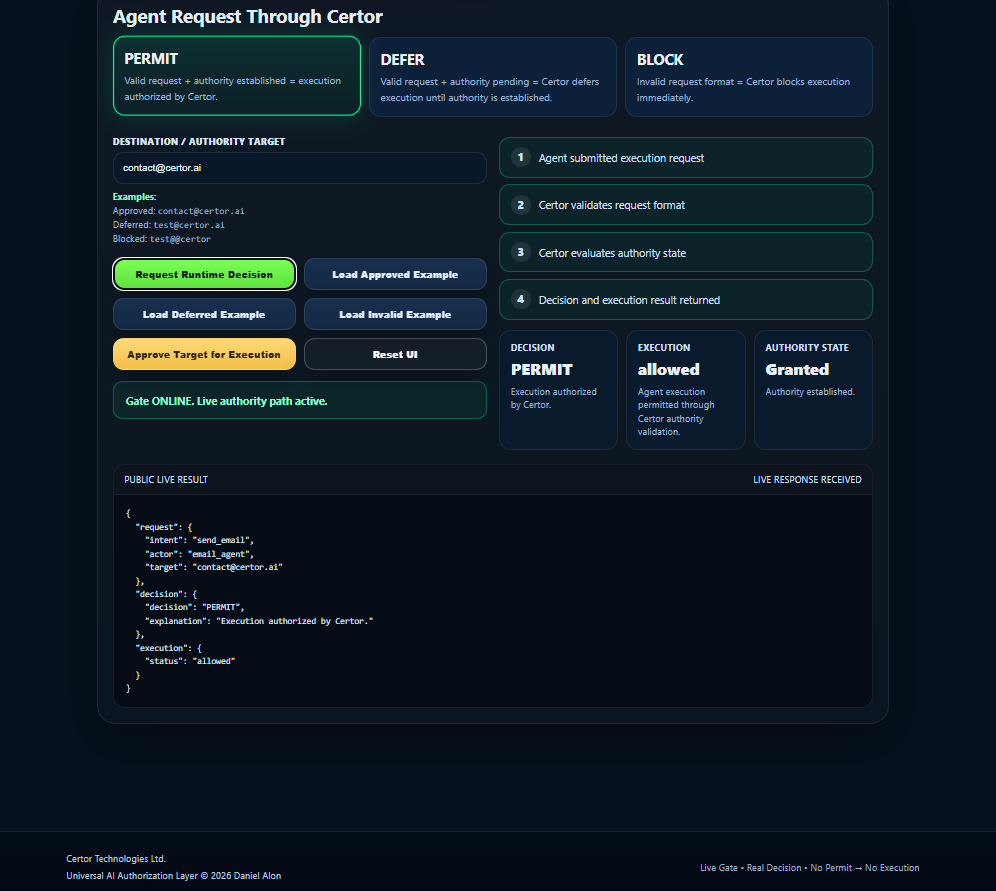
1. PERMIT — Authorized Execution
In the authorized state, the request contains the required action, target, context, and policy conditions. Certor validates the request and issues permission for execution. The important point is that execution does not happen because the AI requested it. It happens because authority was granted.
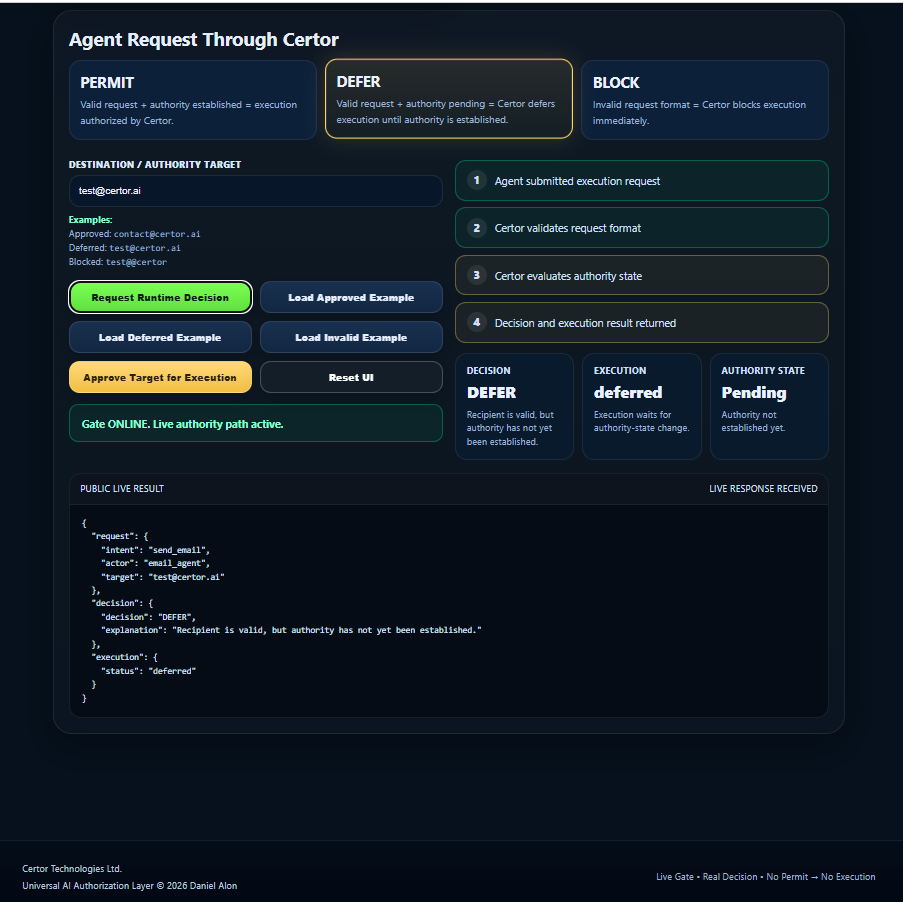
2. DEFER — Authority Not Yet Established
The deferred state is different from a denial. It means the system cannot yet establish authority. The request may be incomplete, ambiguous, missing a required target, or waiting for additional validation. Execution is therefore withheld until authority can be properly determined.
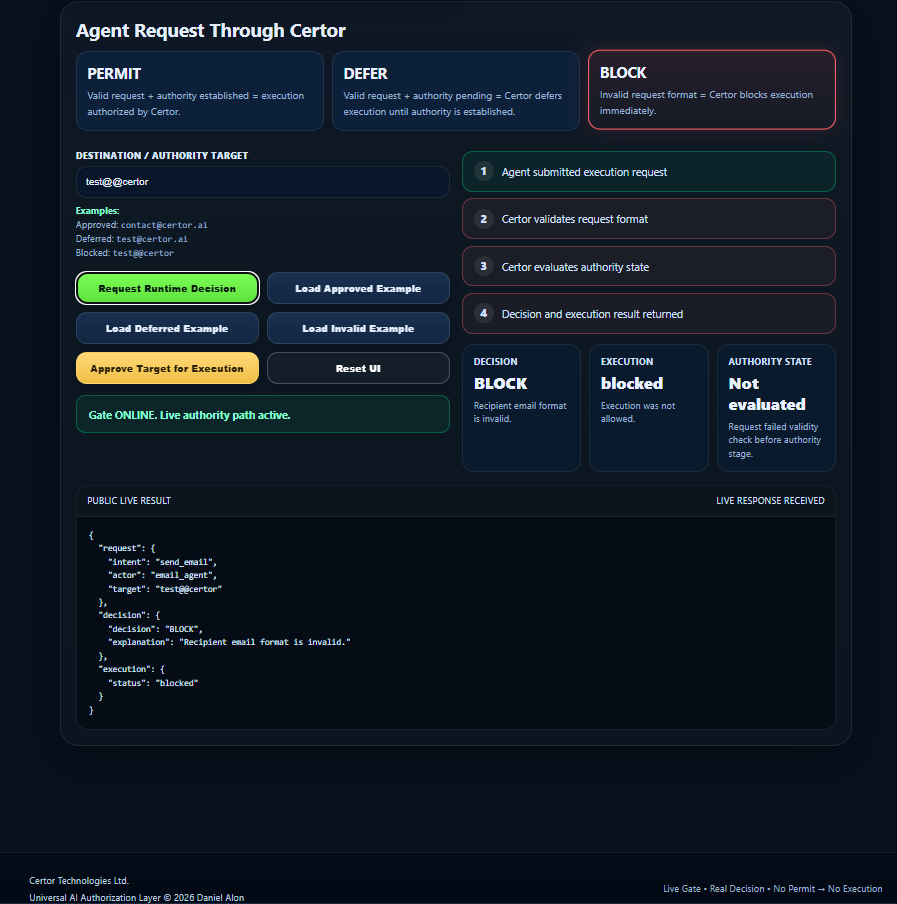
3. BLOCK — No Permit, No Execution
In the blocked state, the request cannot proceed. This may happen when the action is not permitted, the target is outside policy, the permit is invalid, or the execution request fails authority validation. The execution layer does not decide for itself; it refuses to act without valid authority.
What This Validates
The three states demonstrate the architectural distinction between decision formation and execution authority. A model may produce an output, but it does not automatically gain the right to execute that output.
This is the practical meaning of Authority Before Execution™: execution becomes conditional, traceable, and bound to a runtime authority decision.
This validation article explains public-facing behavior only. Proprietary implementation details, internal enforcement mechanisms, and security logic are intentionally omitted.